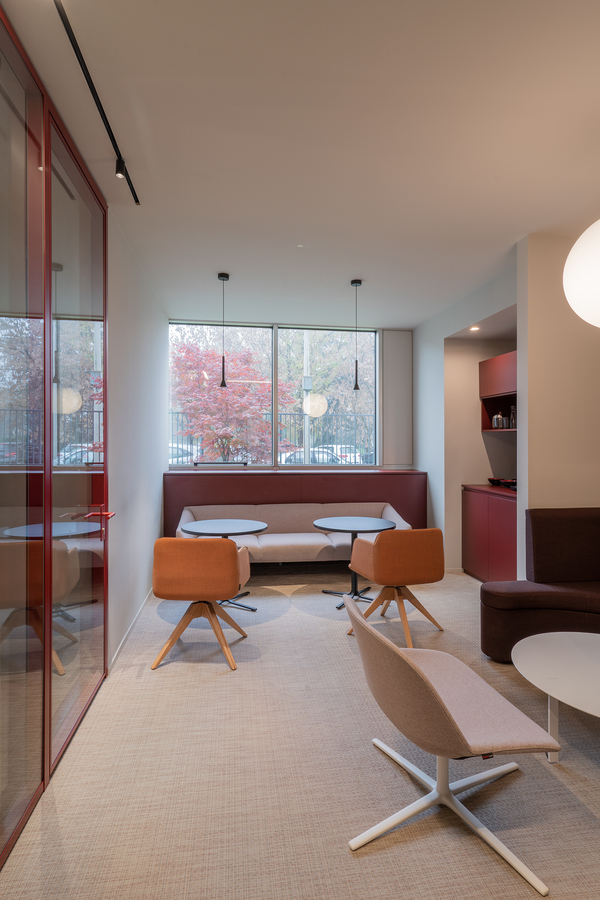
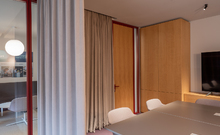
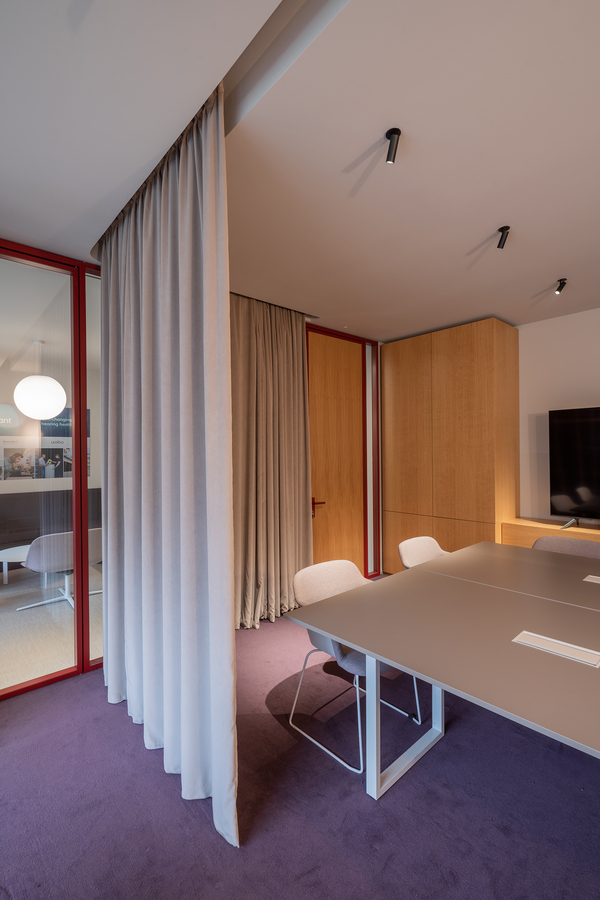
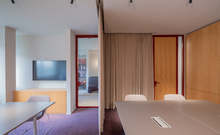
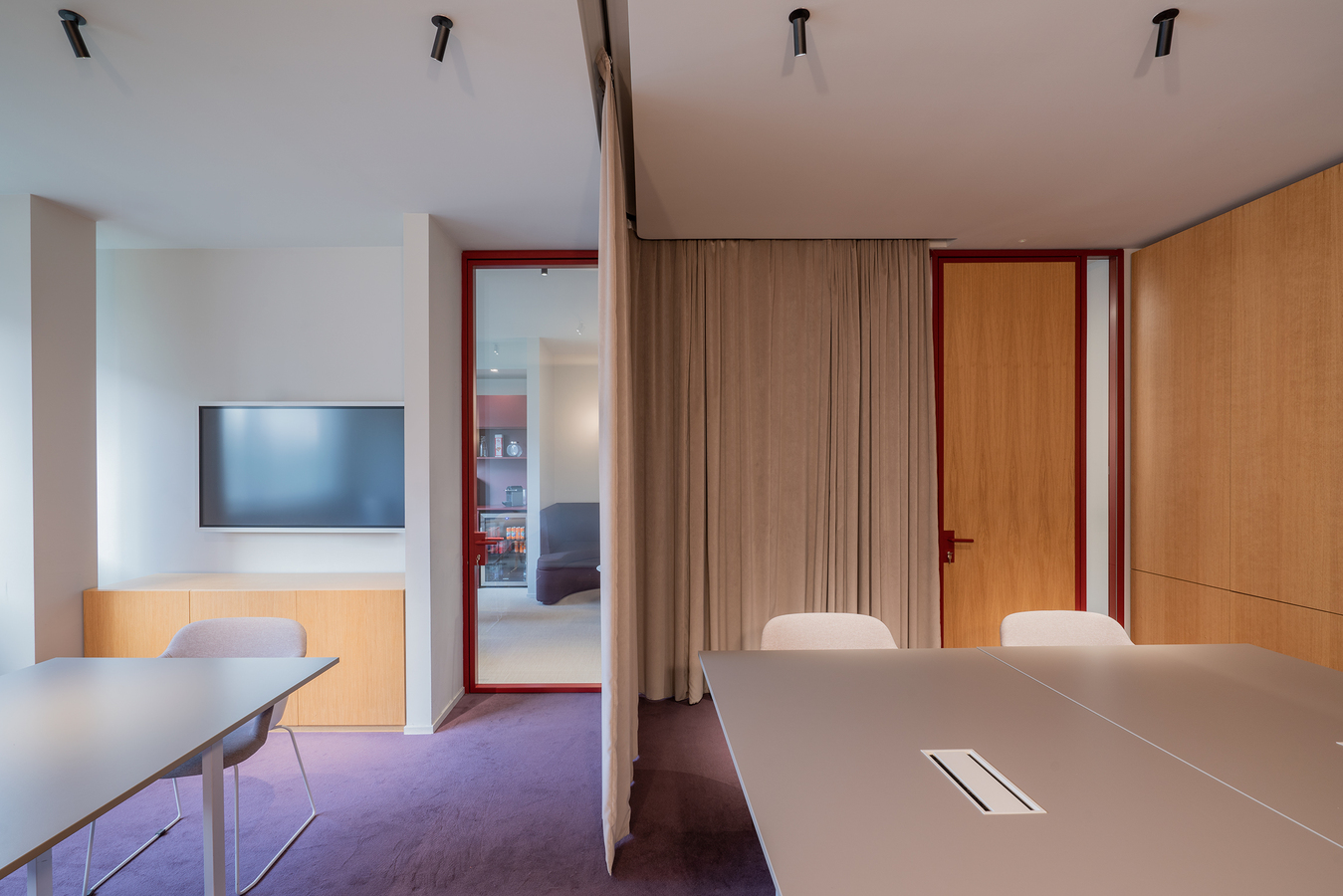
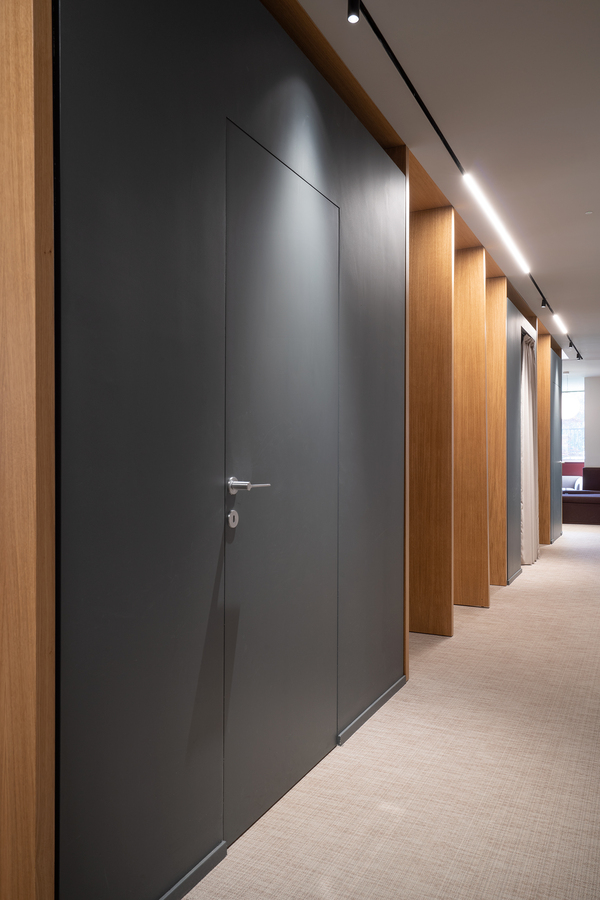
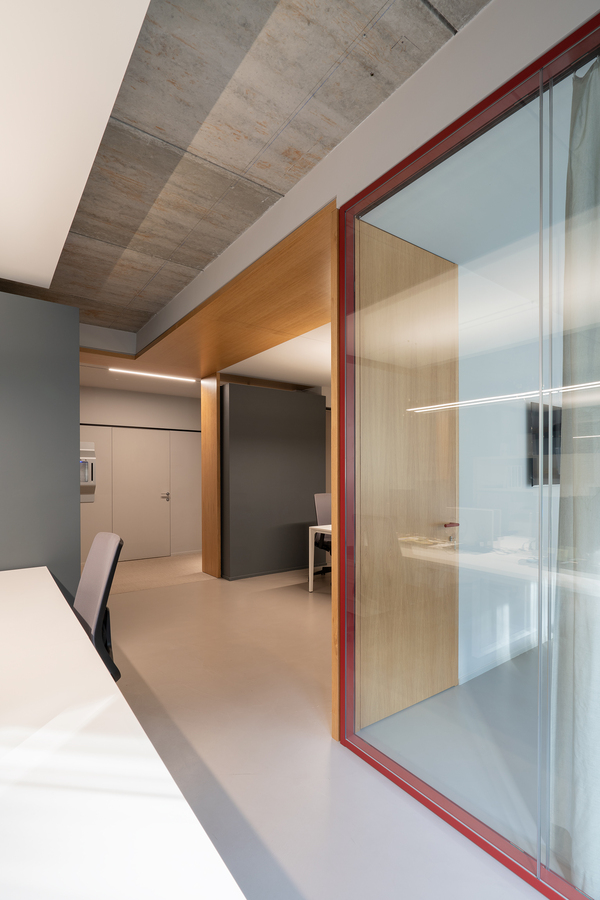
Project: Domenico Farinaro, Stefania Micotti, Franco Rosi. Photos: Vincenzo Pagliuca. The project for the new Demant offices – a Danish multinational company operating in the healthcare sector – is situated on the ground floor of a commercial building, which is largely unremarkable and lacks any apparent architectural features to highlight within the design process. The intention was not to emphasise the all-too-often-used dichotomy between work areas and so-called special areas, but rather to transform the space by creating a continuum of environments, clearly defined from one another yet characterised by the same comfortable and chromatically enveloping atmosphere.
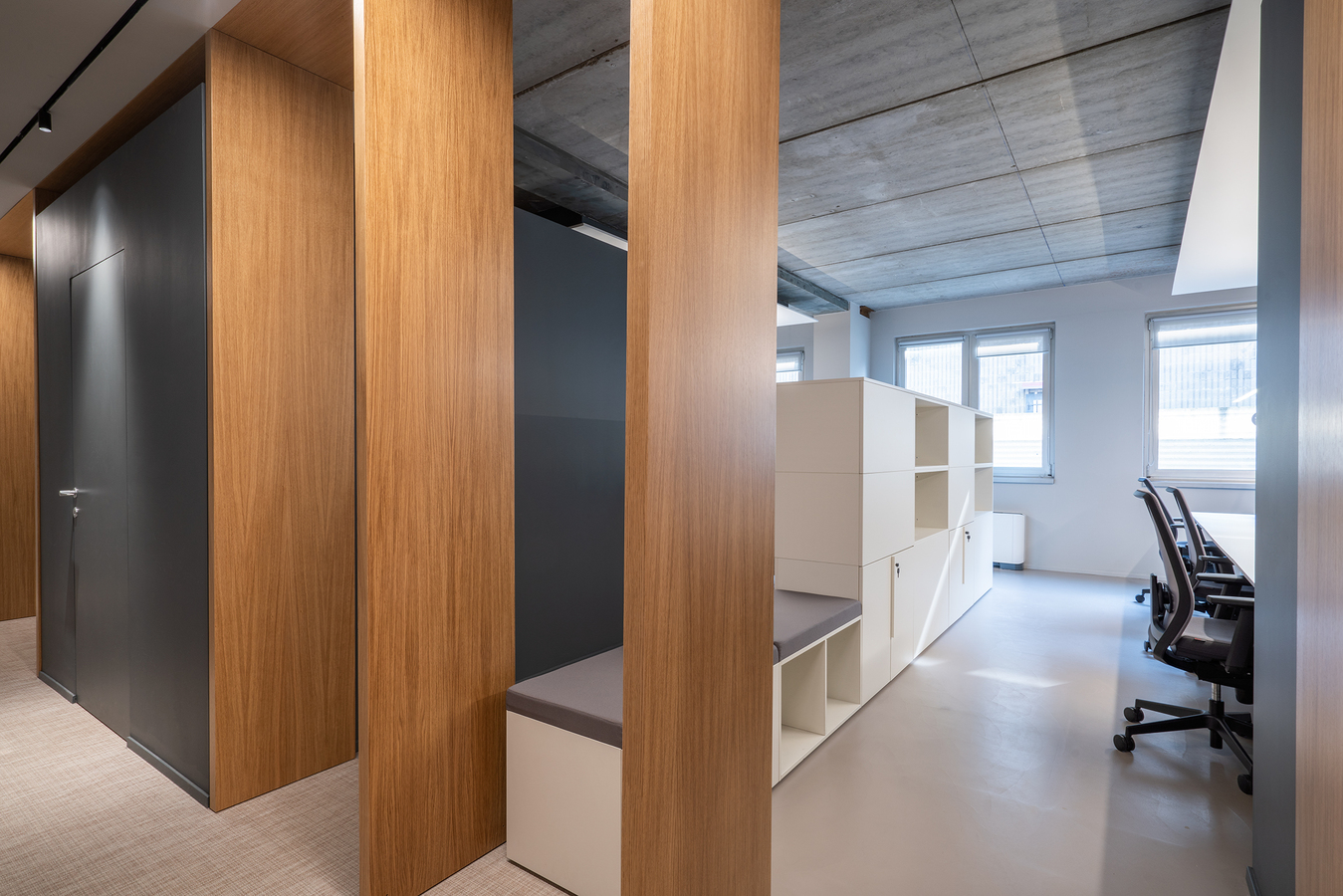
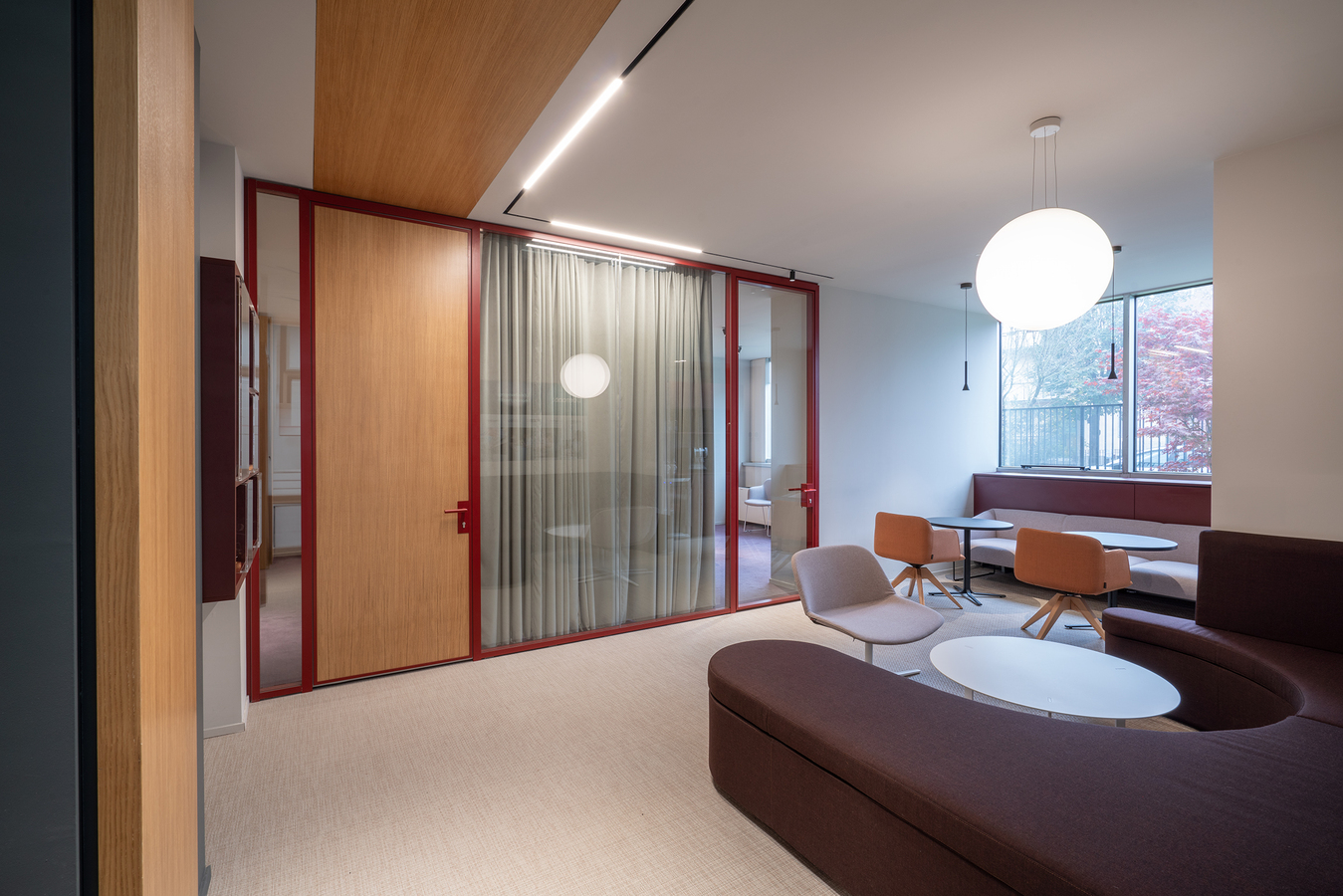
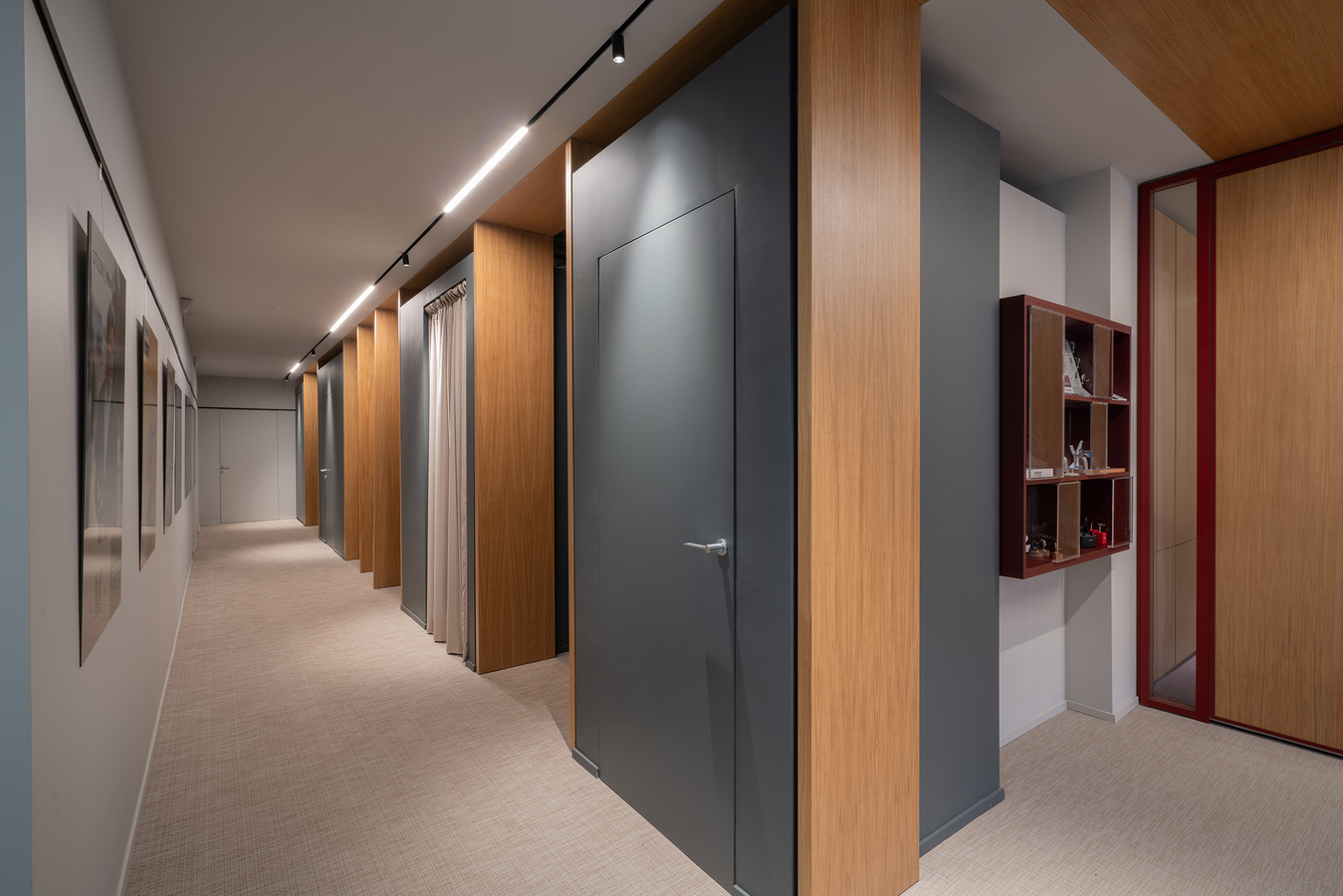
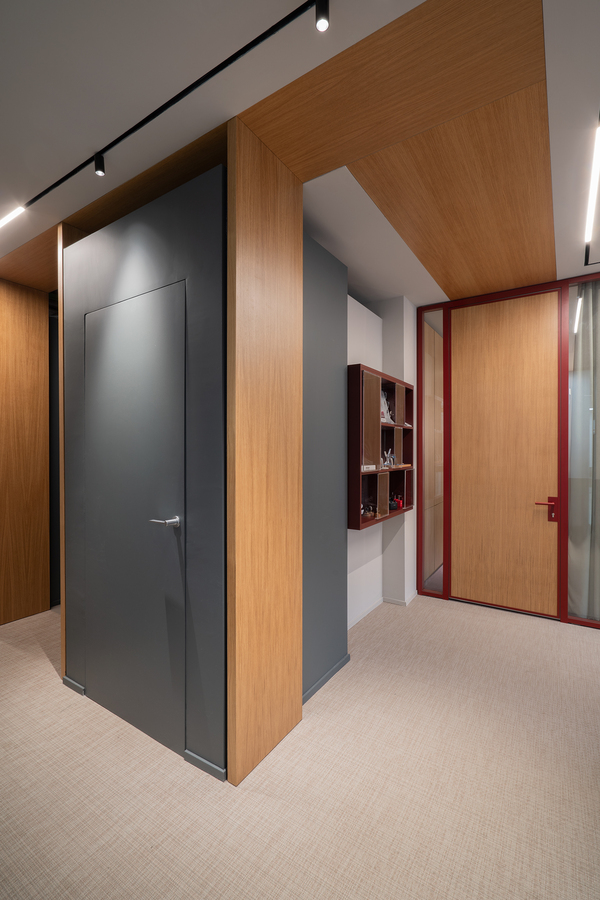
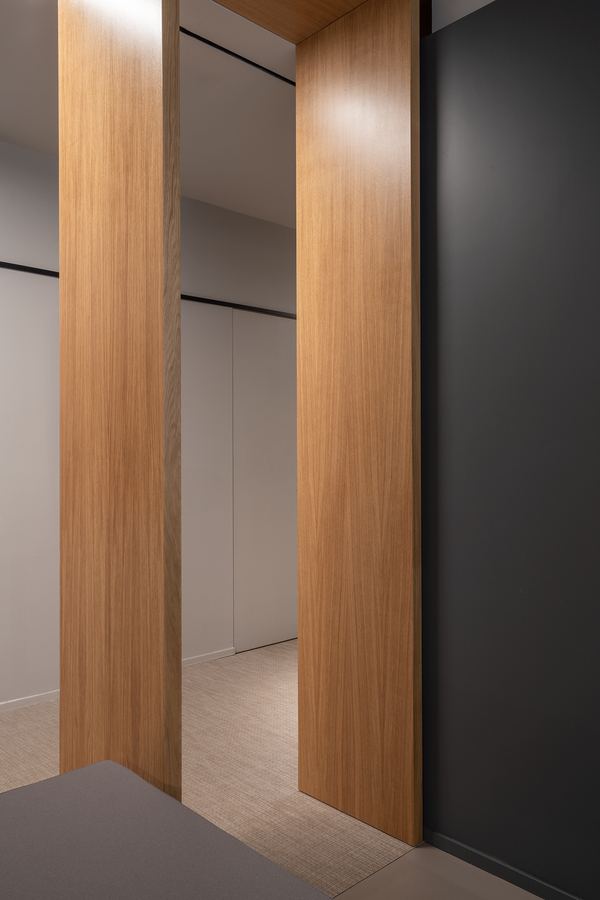
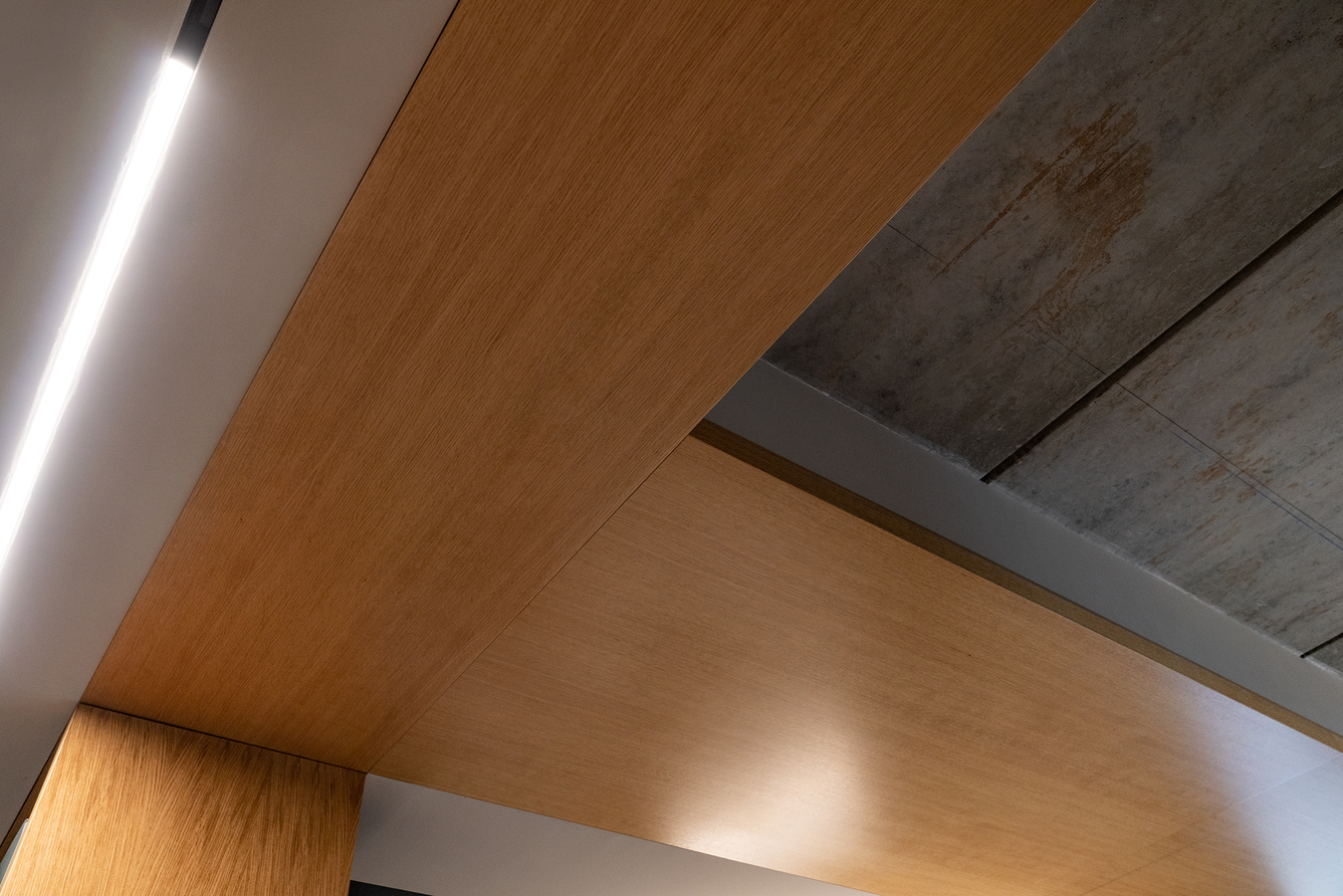
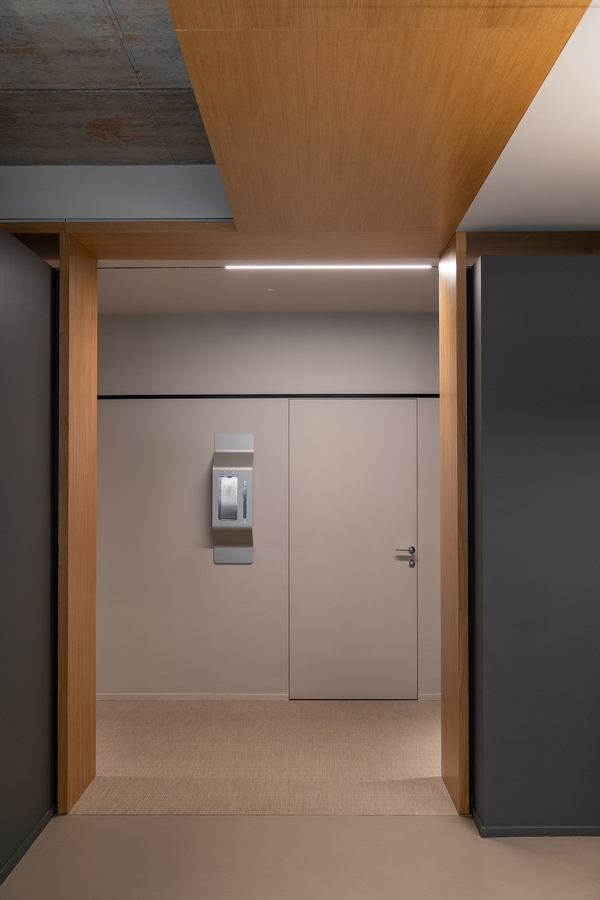
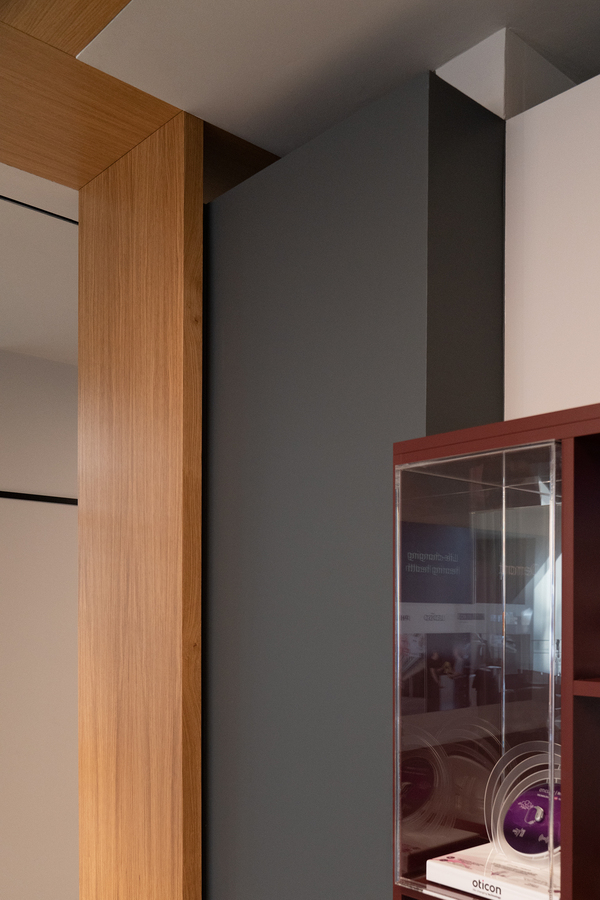
A wooden element, configured as a sort of full-height architectural brise-soleil, acts as a filter around which the entire design project revolves, separating—albeit not sharply—the circulation corridor from the open-plan space, and unfolding through vertical elements and ceiling inserts to reach the main meeting room, which is already visible upon entering the spaces. Within the wooden filter, blue-grey volumes are integrated, with direct access from the circulation area, serving as support spaces for the open-plan workspace.
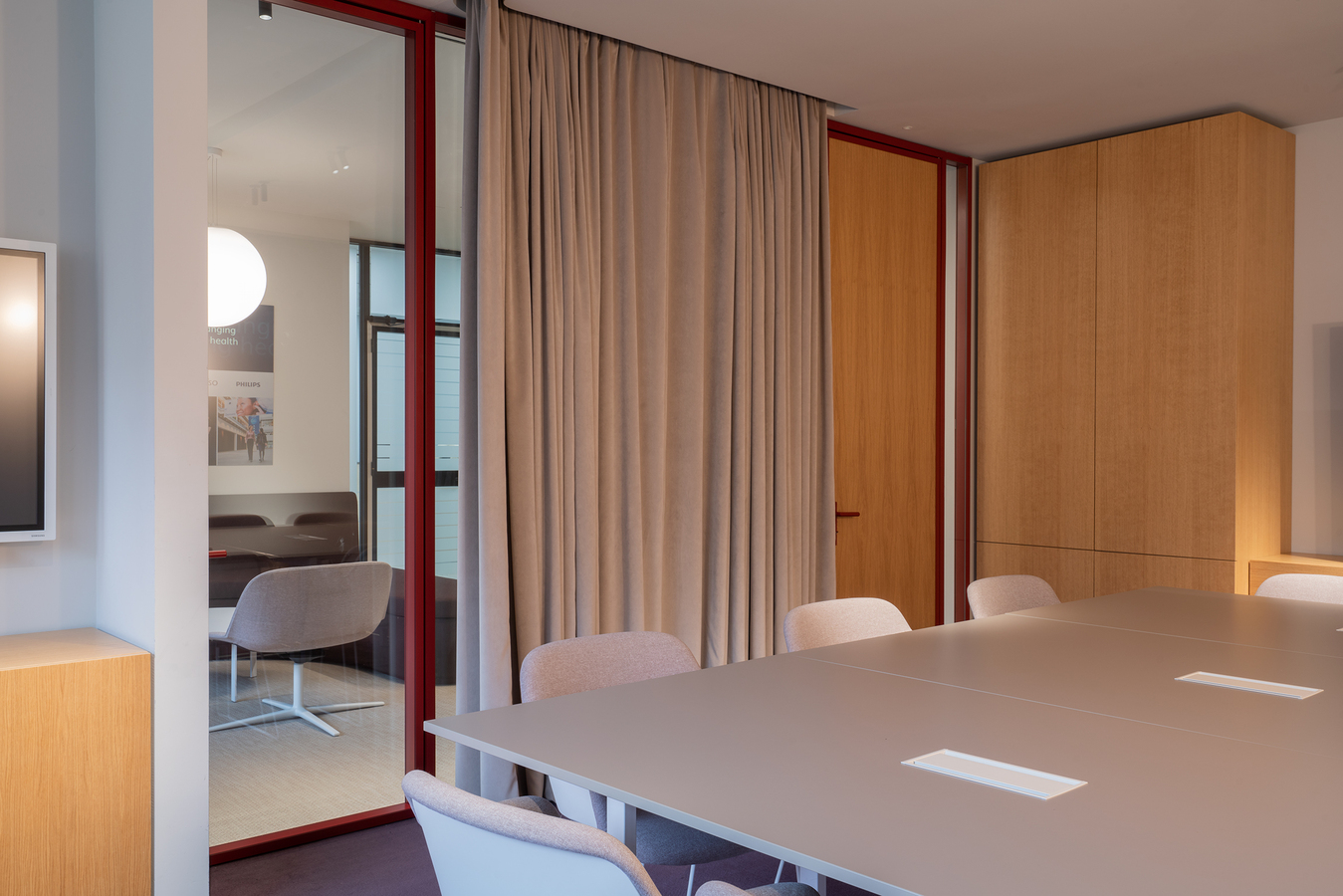
The choice of materials stems from an analysis of the company’s corporate identity, employing a desaturated shade of blue, enlivened by a series of more or less vibrant hues that adorn the fabrics and define the contours of the movable glass walls, alongside the use of oak in the reception area, serving as a key element—not only architecturally but also in terms of materiality—of the entire project. The woven vinyl fabric flooring, which covers the reception area and circulation space, becomes a fundamental unifying element that harmonises tone-on-tone with the monochromatic resin of the open-plan area and the mauve velvet carpet in the meeting room.
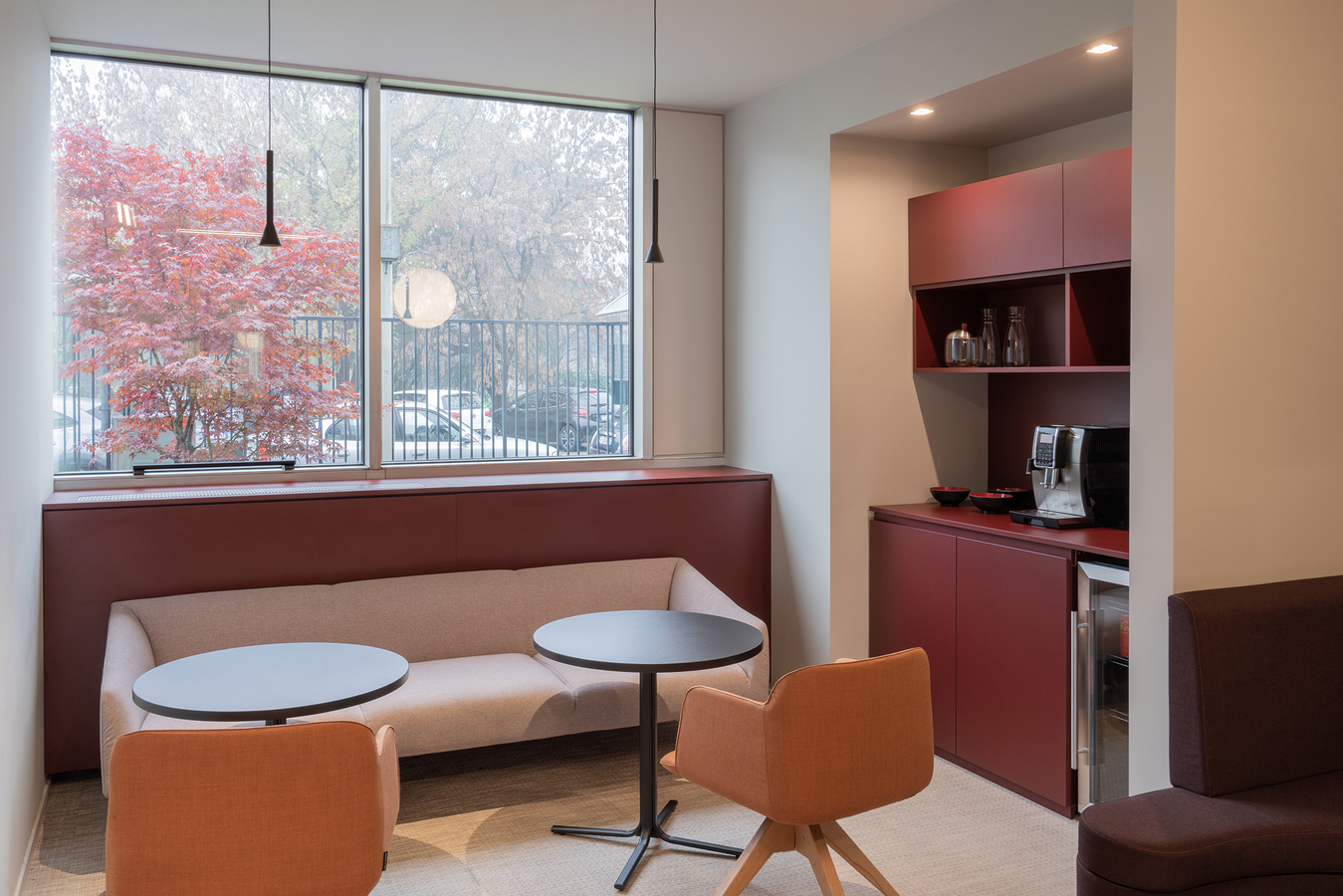
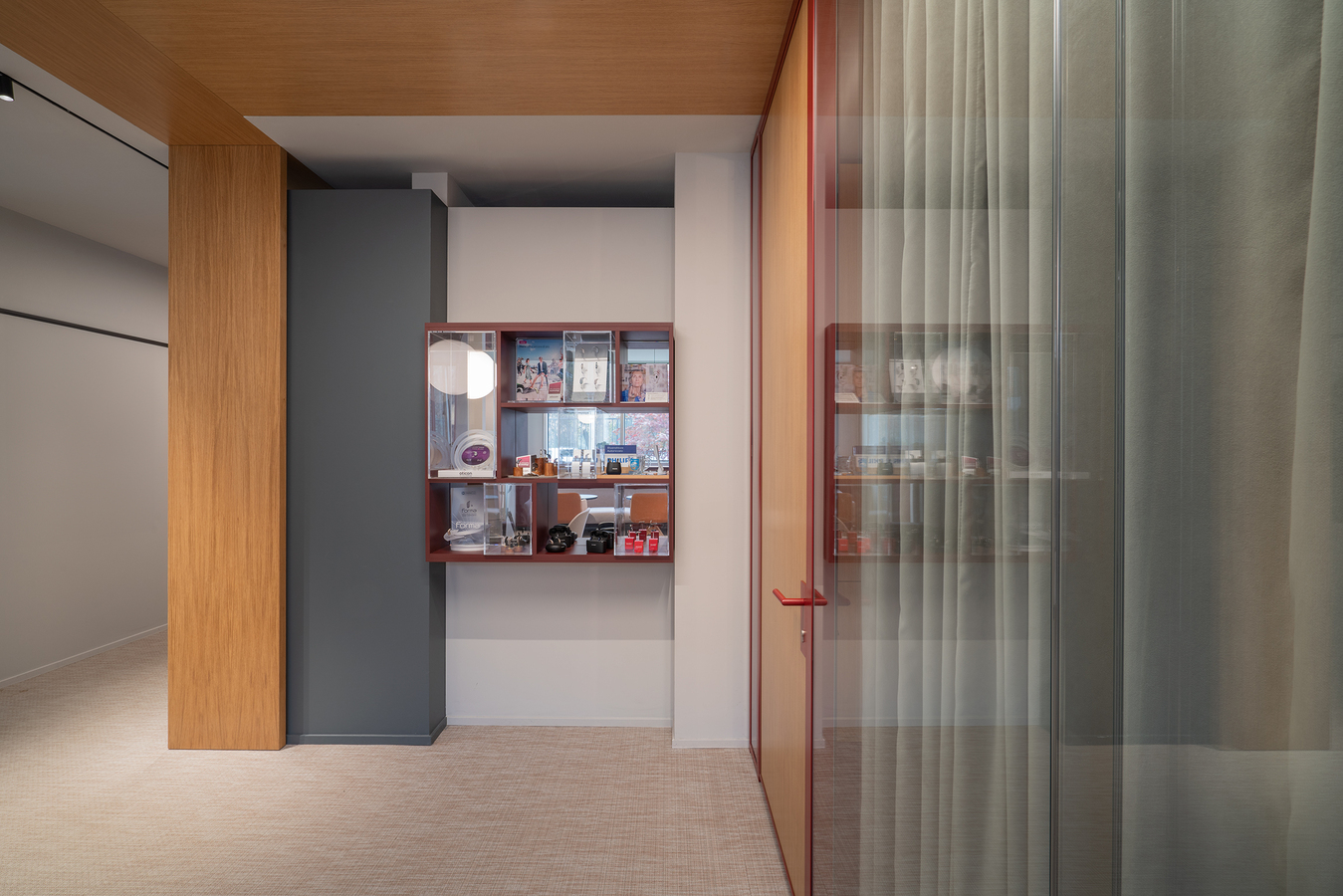
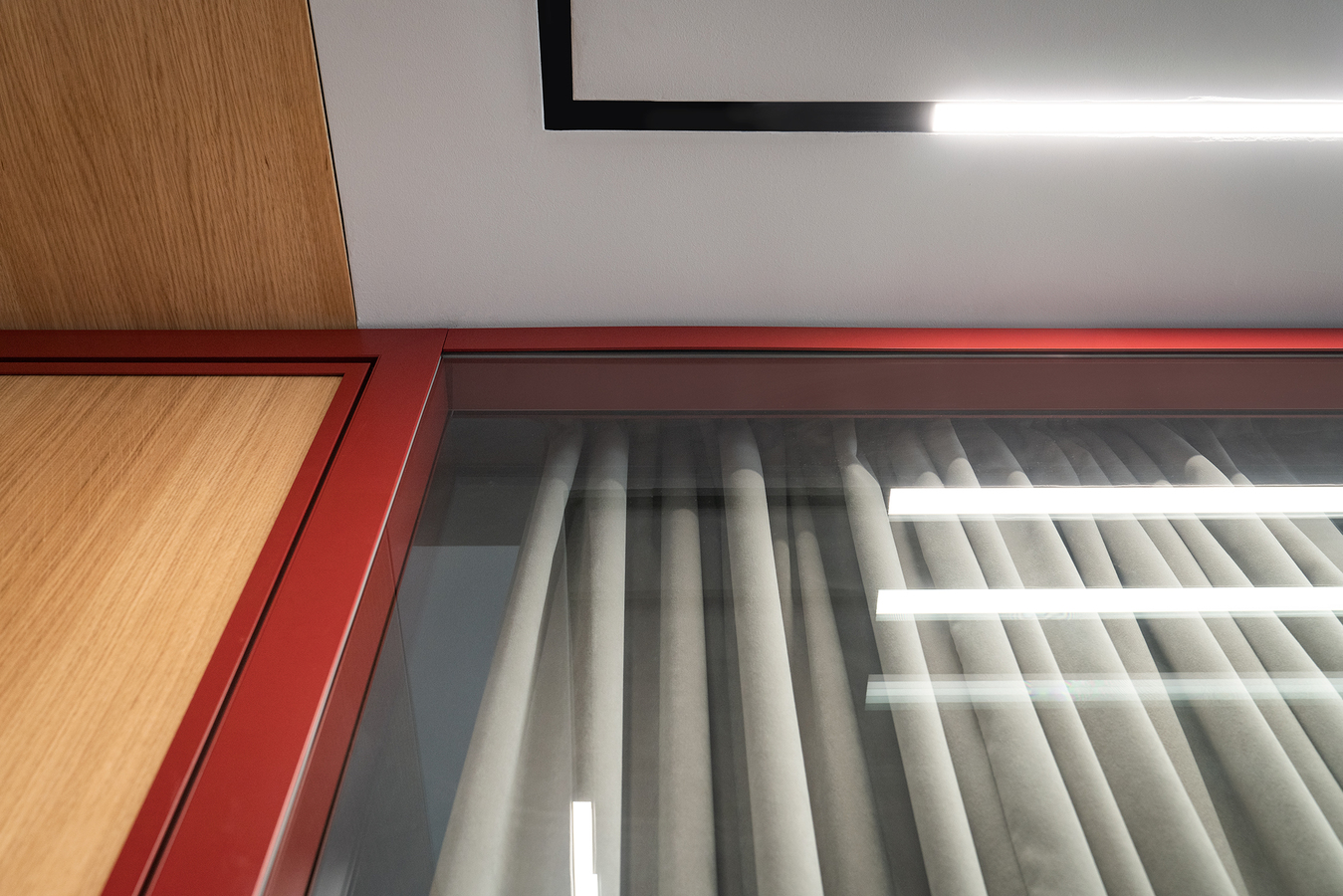
Burgundy lacquer finishes and red-painted steel profiles, combined with textile coverings ranging from wine red to powder pink and terracotta, contribute to a chromatic eclecticism that deliberately contrasts with the lighting and the exposed concrete ceilings of the open-plan space, which possess a strong technological and structural aesthetic.